
The Complete Guide to Ashtanga Yoga: Lineage, Tristana Method, Sequence, and Tradition
A comprehensive guide to Ashtanga Yoga—exploring its lineage, the Tristana method (Ujjayi, Bandhas, 9 Drishtis), the Vinyasa system, practice structure, Mysore style, and traditional rest guidelines.
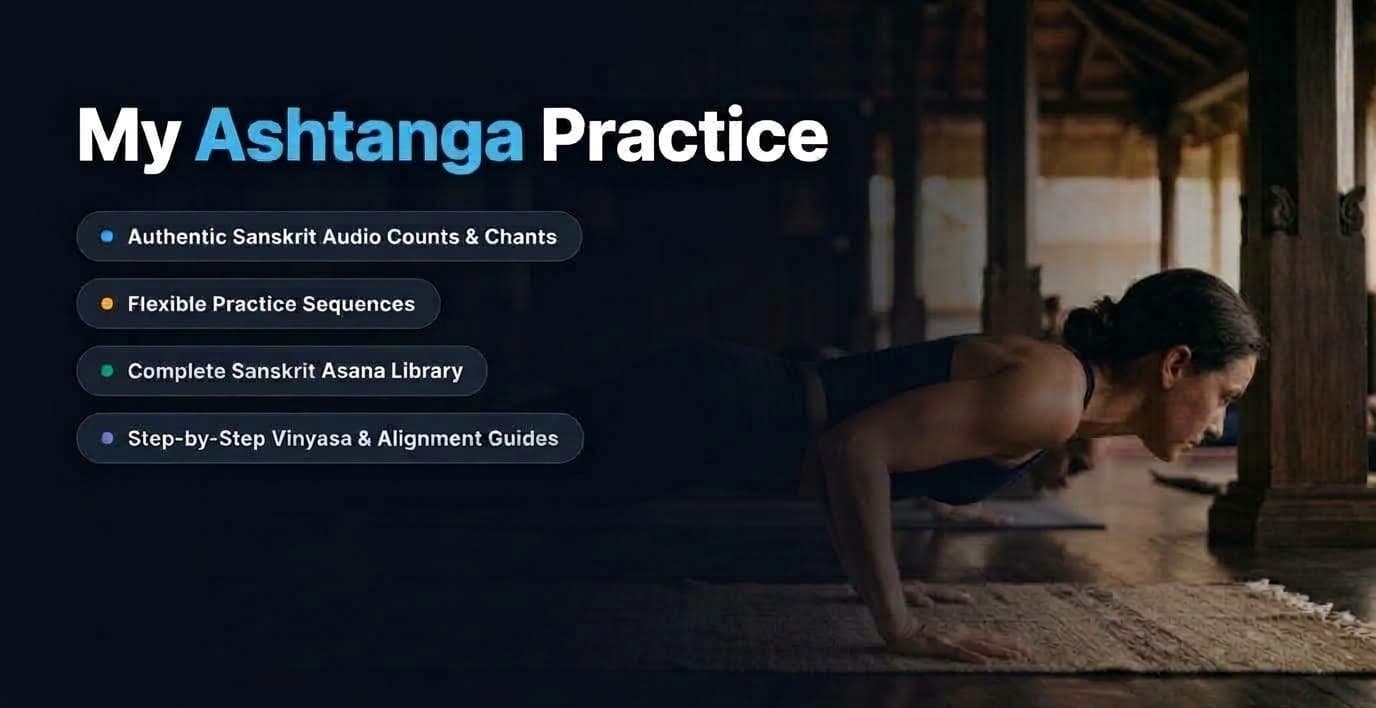
Rooted in classical yogic philosophy and physical mastery, Ashtanga Yoga is one of the most respected, rigorous, and transformative systems of modern yoga.
Whether you are stepping onto the mat for the first time or looking to understand the traditional framework behind your practice, here is a complete guide to the lineage, benefits, core methods, sequence architecture, and traditional guidelines of Ashtanga Yoga.
Lineage and Tradition
The word Ashtanga translates literally from Sanskrit as "eight limbs" (ashta = eight, anga = limb), referring to Sage Patanjali’s classical eightfold path outlined in the Yoga Sutras:
- Yama (Ethical disciplines & universal moral restraints)
- Niyama (Personal observances & self-discipline)
- Asana (Postural practice)
- Pranayama (Breath regulation & energetic control)
- Pratyahara (Sensory withdrawal)
- Dharana (Concentration)
- Dhyana (Meditation)
- Samadhi (Absorption & spiritual liberation)
While Patanjali articulated the philosophical map, the dynamic asana sequences practiced today trace back to T. Krishnamacharya and were codified and popularized worldwide by his student, Sri K. Pattabhi Jois (1915–2009) in Mysore, India.
Drawing from traditional texts including the Yoga Korunta, Ashtanga emphasizes abhyasa (disciplined, dedicated daily practice) and tapas (internal heat and physical purification), turning physical movement into a focused moving meditation.
Why Practice Ashtanga?
A regular, dedicated Ashtanga practice transforms not only muscle and bone, but also the nervous system and mental state:
- Muscular Strength & Functional Mobility: Moving through full body weight transitions, forward folds, arm balances, and backbends balances flexibility with structural stability.
- Internal Detoxification & Heat (Tapas): The synchronization of deep continuous breath and vigorous movement stokes Agni (digestive and internal fire). This elevated internal heat stimulates blood circulation, loosens fascial tension, and purifies organ systems.
- Mental Clarity & Moving Meditation: By anchoring your awareness to three key focal points (the Tristana method), the constant chatter of the mind subsides, cultivating profound concentration (dharana).
- Resilience & Nervous System Regulation: Showing up to the same fixed sequence daily reveals where the mind resists, clings, or distracts itself. Over time, practicing through discomfort builds lasting emotional grit, nervous system regulation, and enduring vitality.
The Tristana Method
Ashtanga is distinguished by the Tristana method—the harmonious integration of three core focal points maintained simultaneously throughout every posture and transition:
                  ┌───────────────────────┐
                  │    TRISTANA METHOD    │
                  └───────────┬───────────┘
         ┌────────────────────┼────────────────────┐
         ▼                    ▼                    ▼
┌──────────────────┐ ┌──────────────────┐ ┌──────────────────┐
│ Ujjayi Pranayama │ │     Bandhas      │ │     Drishti      │
│ (Ocean Breath)   │ │ (Energetic Locks)│ │   (Focal Gaze)   │
└──────────────────┘ └──────────────────┘ └──────────────────┘
1. Ujjayi Breath
Ujjayi is a diaphragmatic breathing technique characterized by a gentle contraction at the back of the throat (the glottis):
- Sound: Creates a soft, resonant sound reminiscent of ocean waves.
- Equal Rhythm (Sama Vritti): Inhalations and exhalations are balanced in both length and intensity.
- Thermodynamic & Calming: Builds internal digestive fire (agni), maintains energetic rhythm, and stimulates the vagus nerve to calm the autonomic nervous system.
2. Bandhas (Energy Locks)
Bandhas are internal muscular contractions that seal and channel life force energy (prana) upward through the central energetic channel:
- Mula Bandha (Root Lock): Subtle contraction and lifting of the perineum and pelvic floor, providing core grounding, pelvic stability, and energetic lightness.
- Uddiyana Bandha (Abdominal Lock): Inward and upward engagement of the lower abdomen below the navel, supporting the lumbar spine, protecting the lower back, and facilitating effortless upward movement during transitions.
- Jalandhara Bandha (Throat Lock): Gentle lowering of the chin toward the sternum in specific postures and breath retentions to regulate cranial and thyroid pressure.
3. Drishti (Focal Gazes)
Drishti refers to designated focal points for the eyes during each posture and transition. By anchoring the eyes, the wandering tendency of the mind is quieted, developing internal focus (pratyahara and dharana).
In Ashtanga Yoga, there are 9 traditional gazing points (Nava Drishti):
| # | Sanskrit Name | Gazing Point | Example Postures |
|---|---|---|---|
| 1 | Nasagrai | Tip of the nose | Samasthiti, forward folds, Chaturanga |
| 2 | Bhrumadhya | Third eye (between eyebrows) | Urdhva Mukha Svanasana, Headstands |
| 3 | Nabhi Chakra | Navel | Adho Mukha Svanasana (Downward Dog) |
| 4 | Hastagrai | Tip of the hand / Middle finger | Virabhadrasana B (Warrior II), Trikonasana |
| 5 | Padayoragrai | Toes / Big toes | Paschimottanasana, Janu Sirsasana |
| 6 | Parsva Drishti (Right) | Far right peripheral | Right-side seated spinal twists (Marichyasana C/D) |
| 7 | Parsva Drishti (Left) | Far left peripheral | Left-side seated spinal twists |
| 8 | Angusthamadhya | Tip of the thumbs | Overhead arm raises (Utkatasana, Virabhadrasana A) |
| 9 | Urdhva / Antara | Upward toward the sky | Deep backbends (Urdhva Dhanurasana) |
The Vinyasa System
Vinyasa means breath-synchronized movement (vi = in a special way, nyasa = to place). In Ashtanga, it operates across three complementary layers:
- Foundation with Sun Salutations: The practice always begins with Surya Namaskara A (9 vinyasas) and Surya Namaskara B (17 vinyasas). These establish the central breath rhythm, articulate the spine, and warm the major joints.
- Breath-Movement Pairing: Every single movement into, within, and out of an asana is paired with a specific, prescribed inhalation (expansive/upward) or exhalation (folding/grounding/twisting).
- Connecting Vinyasas Between Poses: Dynamic transitions (jumping back through Chaturanga Dandasana, Urdhva Mukha Svanasana, and Adho Mukha Svanasana, and jumping through) are integrated throughout the seated sequence. These transitions clear the physical slate between asymmetrical postures, reset spinal neutrality, sustain internal heat (agni/tapas), and maintain cardiovascular momentum so the body never cools down.
Sequence Architecture
The Ashtanga system follows a fixed, progressive architecture designed to prepare and purify the body step-by-step:
- Opening Chant (Invocation): Expresses gratitude to the lineage and teachers, centering the mind for practice in Samasthiti.
- Surya Namaskara (Sun Salutations):
- Surya Namaskara A (5 rounds): Establishes breath rhythm and warms the spine.
- Surya Namaskara B (5 rounds): Introduces deeper hip opening and leg strength.
- Standing Sequence: Fundamental standing postures that establish balance, grounding, leg strength, and pelvic alignment.
- Primary Series (Yoga Chikitsa): Meaning "Yoga Therapy", this series focuses on forward bends, hip openers, and spine realignment to detoxify and heal the physical body.
- Finishing Sequence: Inversions, backbends, and seated breathing that cool down the nervous system, balance endocrine function, and restore equilibrium.
- Closing Chant (Mangala Mantra): A traditional universal prayer dedicating the fruits of practice to peace and universal well-being (Lokah Samastah Sukhino Bhavantu).
- Savasana (Corpse Pose): 10–15 minutes of complete relaxation to integrate the physiological and energetic benefits of practice.
Mysore Style Practice
What is Mysore Style?
The traditional method of learning Ashtanga is known as Mysore style, named after the city of Mysore in Karnataka, India:
- Individual Pace: Students practice at their own individual pace and breath rhythm within a shared, quiet room.
- Pose-by-Pose Progression: Postures are learned and memorized one by one, adding new postures gradually as strength, openness, and integration develop.
- Personalized Guidance: The teacher moves around the room offering individualized hands-on adjustments, verbal cues, modifications, and personal guidance.
Teachers & Home Practice
While working with an experienced, certified teacher remains the gold standard for refining posture alignment, navigating anatomical obstacles, and receiving hands-on adjustments, building a consistent daily home practice (abhyasa) requires dedication and reliable guidance.
To support your daily study and practice at home, we've developed My Ashtanga Yoga Practice, an authentic, distraction-free mobile app that stays true to the classical Mysore tradition.
Traditional Practice Guidelines
To maximize the therapeutic and energetic benefits of Ashtanga Yoga, traditional shalas adhere to four cornerstone principles:
- Practice on an Empty Stomach: Wait at least 3–4 hours after a heavy meal or 1.5–2 hours after light snacks or fluids before practicing.
- Hydration & Preserving Heat: Avoid drinking water during active practice to preserve internal cleansing heat (Agni). Hydrate well before practice and wait 15–20 minutes after Savasana.
- Morning Practice (Brahmamuhurta): Traditionally practiced early in the morning at dawn when the environment is quiet, the mind is clear, and the stomach is naturally empty.
- Cleanliness & Environment (Saucha): Practice in a clean, quiet, well-ventilated space with a supportive, non-slip mat and clean body/clothing.
Moon Days & Rest
In the Ashtanga tradition, balancing disciplined effort (Abhyasa) with restorative rest (Vairagya) is essential for longevity:
- Moon Days (Purnima & Amavasya): Full moon and new moon days are traditional rest days. Just as lunar gravitational pull affects ocean tides, it influences bodily fluids and subtle energy:
- Full Moon (Purnima): High pranic (upward) energy; feelings of overstimulation make injury more likely if pushing too hard.
- New Moon (Amavasya): High apanic (downward) energy; joints feel drier and physical stamina is lower. Pausing practice aligns us with nature's cycles.
- Weekly Rest Day: One day per week (traditionally Saturday) is taken as a full rest day from physical asana to allow muscle repair and nervous system recovery.
- Ladies' Holiday: Practitioners take 2–3 days of rest during the heaviest flow of the menstrual cycle to allow downward-flowing energy (Apana Vayu) to operate without intense core contraction or inversions.
Deepen Your Journey with My Ashtanga Yoga Practice
Whether you are beginning with Sun Salutations or cultivating a full daily Primary Series practice, My Ashtanga Yoga Practice provides an authentic, serene guide on your phone:
- Voice-Guided Practice: Audio guidance with authentic traditional counts and customizable breath cadences (from 4 to 10 breaths per minute) to help you anchor your steady Ujjayi rhythm.
- Flexible Sequences for Every Day:
- ☀️ Sun Salutations Only (~10–20 min): Quick morning awakening or time-constrained practice.
- 🌸 Finishing Sequence Only (~25–30 min): Calming inversions, counter-poses, and restorative closing.
- 🌿 Quarter & Half Primary Series (~60–90 min): Progressive milestones to build endurance and strength.
- 🧘 Full Primary Series (Yoga Chikitsa): Complete traditional practice from opening chant to Savasana.
- Pronunciation & Sanskrit Pose Library: Detailed Sanskrit terminology, IAST transliteration, root-word breakdowns, and designated focal gazing points (Drishti) for each pose.
- Traditional Chants: Authentic audio recordings and text for the Opening Invocation (Vande Gurunam) and Closing Peace Prayer (Mangala Mantra).
- Offline-First & Distraction-Free: 100% offline-capable with zero ad interruptions, practice reminders, and Apple Health integration to automatically log your yoga sessions.
Download My Ashtanga Yoga Practice:
Bring the authentic wisdom, cadence, and discipline of the Mysore tradition to your home mat.
The Power of Consistency
In Yoga Sutra 1.14, Patanjali offers one of the most vital teachings in all of yogic philosophy:
"Sa tu dirghakala nairantarya satkara-asevito dridhabhumih"
"Practice becomes firmly grounded only when pursued continuously, without interruption, and with devoted reverence over a prolonged period of time."
In Ashtanga, consistency (abhyasa) is everything.
It is far more transformative to step onto your mat for 15 to 20 minutes five days a week than it is to exhaust yourself in a marathon 90-minute session once every two weeks. Here is why daily regularity matters so deeply:
- Neurological Rewiring: The brain and nervous system adapt through repetition. Daily exposure to the breath-movement synchronization calcifies motor patterns, quiets reactive fight-or-flight triggers, and makes deep focus your default state.
- Cellular Memory & Fascial Adaptation: Connective tissues, tendons, and muscles do not open through forceful, sporadic strain—they yield to gentle, daily, heated circulation. Consistent practice keeps fascia hydrated and supple.
- The Daily Mirror: Showing up on your mat day after day—regardless of whether you feel energetic, stiff, inspired, or tired—strips away excuses. The mat becomes an objective mirror of your mental habits: where you rush, where you resist, and how you react to challenge.
- Building Unshakeable Momentum: When practice is an established morning ritual like brushing your teeth, you no longer spend precious mental willpower deciding if you will practice today. You simply unroll your mat and breathe.
Even on busy days, rolling out your mat just for Sun Salutations A & B followed by Savasana preserves the unbroken chain of your practice and keeps the internal fire (agni) alive.
A Lifelong Journey
Sri K. Pattabhi Jois famously said:
"Do your practice and all is coming."
Ashtanga is not a race to collect postures, nor is it an athletic performance—it is a lifelong practice of patient, steady self-discovery. Postures will come and go with age, injury, and life transitions, but the habit of daily presence remains yours forever.
By showing up consistently—uniting steady breath (Ujjayi), energetic containment (Bandha), and single-pointed gaze (Drishti) with reverence for rest—the practice ceases to be just something you do on a rubber mat. It becomes an unshakeable anchor for clarity, peace, and resilience in every facet of your life.
Cultivate Stillness in Your Inbox
Enjoyed this article? Join our community for mindful practices, asana tips, and inner reflections delivered directly to your inbox.

Seeking Stillness in the Age of AI
How ancient practices restore balance and peace in a world spinning at light speed.
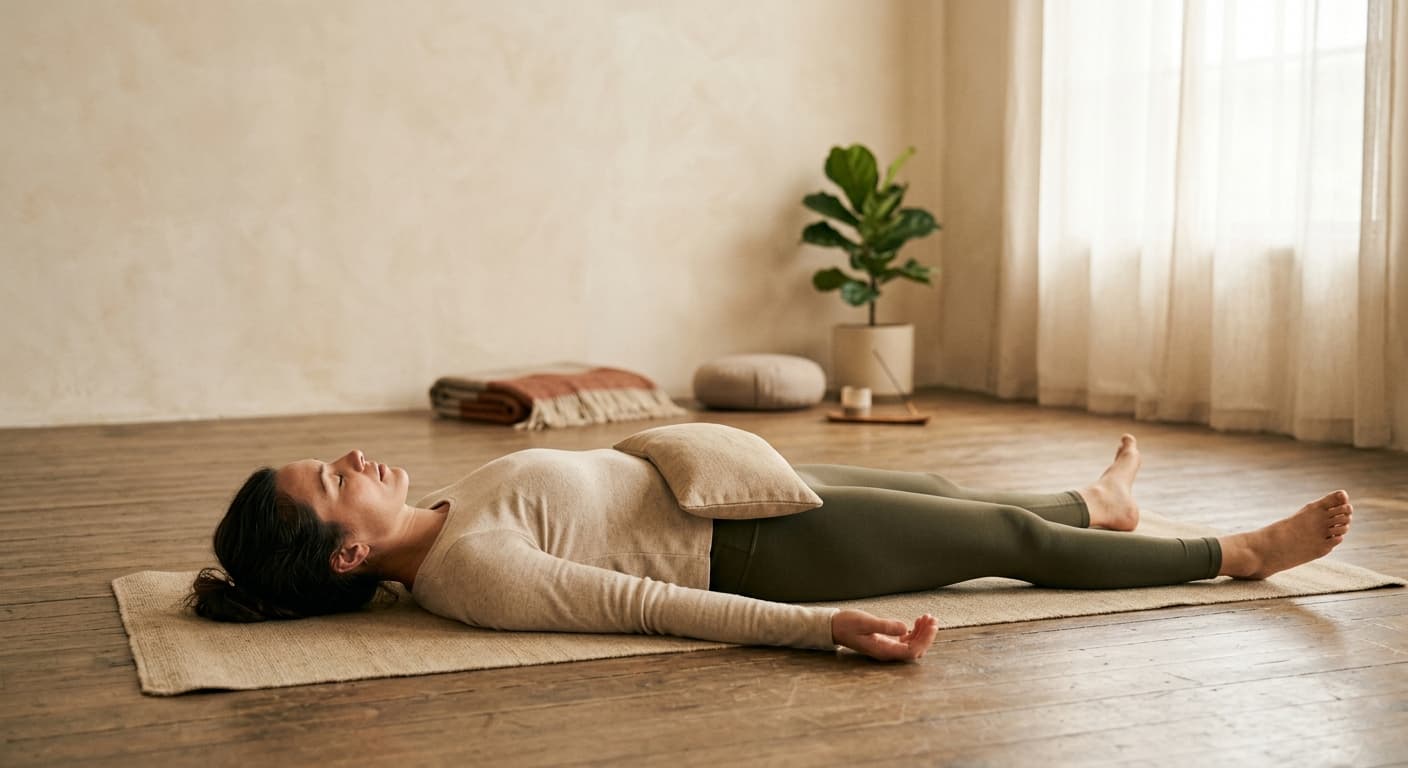
Sandbag Breathing
Cultivate Healthy Breathing Through Gentle Resistance: Reconnecting with the natural movement of the diaphragm.
The Gift of Teaching Yoga
As a yoga teacher, I am deeply grateful to share the love of yoga with others.